Colosseum Codex: v1 Transactions, State of Solana Dashboard, SNS Migration
v1 Transactions, DeFi Development Corp State of Solana Dashboard, SNS .sol Migration


Solana keeps moving forward, and Transaction v1 opens the door to DeFi apps too complex to fit in a single instruction until now. It leads this issue because it's testable locally today, with mainnet activation planned for just a few weeks from now.
Colosseum's latest cohort closed out its program at Demo Day, where every team presented what they built over the course of the program.
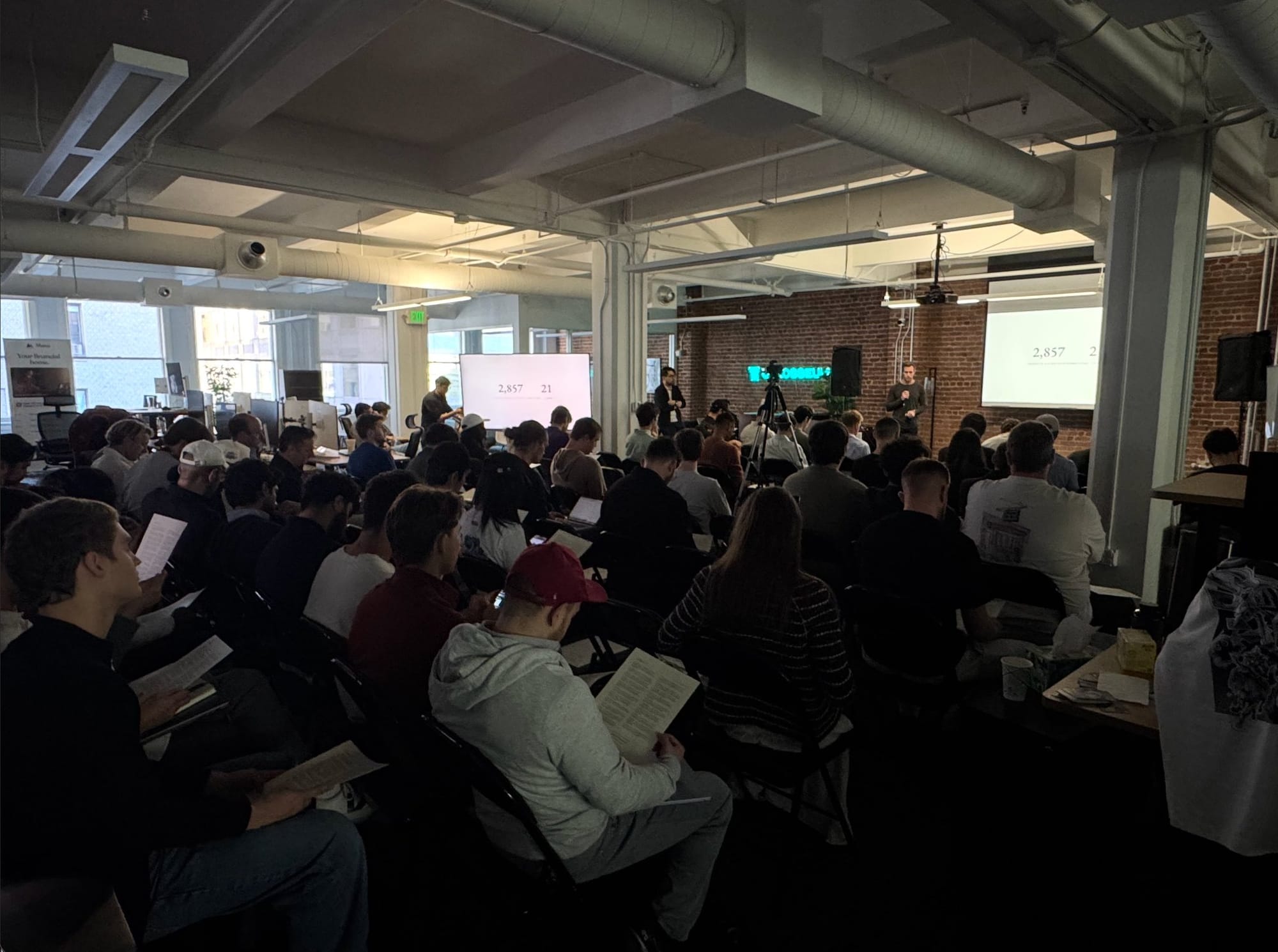
21 teams presented:
- @crowdbrainai
- @cesto_co
- @Peakstrade
- @my_mana_ (formerly KinnectFi)
- @traded_gg
- @flovia402
- @Senthosxyz
- @__Dropset__
- @PlayWLS
- @rwaodl
- @housddotfinance
- @JKIndex_
- @fraudsworth
- @clawpumptech
- @Rosentica (One Arena)
- @myStableCorp
- @SyndicateGameHQ
- @DashXHQ
- @NomuStores
- @LasoFinance
- @zonelessdev
A virtual Demo Day follows in the coming weeks, opening the same lineup to builders and investors who couldn't make it in person.
🔥 v1 Transactions
Solana's Transaction v1 format is now testable locally, with testnet activation planned for late August 2026 and mainnet expected within a couple of weeks after that. The upgrade raises the maximum transaction size from 1,232 to 4,096 bytes, a 3.3x increase that lets operations like zero-knowledge proofs and large multisig transfers fit inside a single atomic transaction instead of being split across several.
V1 drops address lookup tables entirely. The extra transaction space replaces the compression ALTs provided, and it's enough room for operations like confidential balance transfers that couldn't fit before. Compute budgeting also moves out of instructions and into a config field on the transaction message itself, and under v1, ComputeBudget program instructions become no-ops.
Two breaking changes land the moment the first v1 transaction hits mainnet. Both hit infrastructure that reads transaction or block data, not infrastructure that sends it.
- RPC callers need
maxSupportedTransactionVersion: 1set ongetTransactionandgetBlock. Without it,getTransactionerrors on a v1 transaction, a v1 transaction anywhere in a block fails the wholegetBlockresponse, andblockSubscribeemitsblock: nulland stops advancing. - Indexers that scan for the ComputeBudget program to derive compute limits or priority fees will silently return zero for every v1 transaction. Those values moved to the transaction's config field instead. Priority fees also changed units. V0's
SetComputeUnitPriceis denominated in micro-lamports per compute unit where v1's config field is a flat total in lamports.
Sending v1 transactions is opt-in, and legacy transactions keep working. The Solana Foundation has published minimum SDK versions for teams that want to start:
@solana/kit8.0.0- The
solana-*Rust crates at 4.2.x solders0.29.0yellowstone-grpc-proto12.6.0 and Yellowstone Geyser 15.1.1.- Support for
web3.js3.x andsolana-gois still in progress.
v1's compute fields have no defaults, so omitting computeUnitLimit sets it to zero rather than the 200,000 legacy default, and the transaction fails outright. Kit's estimateResourceLimitsFactory can simulate and set those limits automatically.
The transaction-v1-examples repo has samples covering these cases.
4k bytes in a transactions makes room for primitives that didn't fit before or needed transactions stitched together hoping nothing would fail in between. ALTs are gone, and I doubt anyone will miss them.
Solana V1 Transactions Now Testable Locally as Mainnet Activation Nears
📊 State of Solana Dashboard
DeFi Development Corp launched State of Solana, a dashboard that pulls Solana network data into one site at StateofSOL.com.
The dashboard covers:
- SOL price, returns, and historical charts
- Interactive SOL Rainbow chart
- Live TPS and network health
- Staking and validator yield data
- Cross-chain comparisons
- Top yields across Solana
- Network upgrade status
- Trending ecosystem news
DeFi Development Corp is a public company built around leveraged SOL exposure. It built the dashboard to make the case for Solana's usage, throughput, economics, and adoption visible to investors, builders, and users directly, rather than through the company's own commentary.
DeFi Development Corp holds about 2.3M SOL in treasury, and the dashboard is built to back up the thesis that Solana's story is bigger than its price.
State of Solana: Keep tabs on Solana in real-time
📛 SNS Migration
SNS began migrating every .sol domain to .sns and issuing holders a matching, free .sol domain built on the Solana Record Service (SRS), a program written specifically for domain names.
The current registry runs on SPL Name Service, a shared public program used well beyond SNS, so SNS couldn't modify it to fit and built SRS instead.
The domain sitting in a wallet right now doesn't move. yourname.sns keeps its owner, records, primary-domain setting, subdomains, and sub-registrars. Only the displayed suffix changes, and it changes gradually as each wallet and app updates its SNS integration. Solflare, Jupiter Mobile, and Birdeye are among the first to confirm support.
A matching yourname.sol arrives automatically at no cost, with no claim page, signature, or fee. SNS has warned that anyone asking holders to claim, verify, connect, or pay is a scam.
Delivery follows a fixed order based on the August 17 snapshot:
- Domains listed for sale go to the listing wallet rather than marketplace escrow
- Domains held in a sub-registrar go to the sub-registrar owner
- Tokenized domains go to whoever held the NFT
- Everything else goes to the domain's holder.
Subdomains inherit the parent's new .sns suffix but don't get a matching .sol of their own, and non-English and emoji domains qualify the same as any other.
Developers need to upgrade to SNS SDK v4 (JavaScript), v1 (JS Kit), or v2 (Rust), and replace any hardcoded .sol suffix in frontend display code with .sns.
This migration is part of the infrastructure work needed for .sol to eventually become a generic top-level domain.
The .sol Upgrade: What Holders Need to Know
⭐ Highlights
Arcium Launches Bench: Confidential Hiring Markets on Solana - Stacksmith
Privately back a job candidate on a Solana market, and split the prize pool if your candidate gets hired.
How Solana protocol changes go from idea to activation - @readylayerone
Solana's multi-stage process for changes through SIMDs and SGPs how they actually get implemented.
Resource and Inclusion Fee: Digging into Data - @MostlyData_
A data-driven, side-neutral breakdown of what SGP-0003 would actually do in practice.
⚡ Quick Hits
How to profile sBPF programs - soundsonacid
Agave 4.2: Transaction v1 and your breaking changes checklist - Triton One
Scoring SIMD 553: The Law of Demand - Max Resnick
What Watching Fomo’s Rise Taught Me About Vector - @philjacobson
Solana overtakes Base in daily x402 transactions for the first time in six months - @SolanaFloor
Want early access to the latest products launching from Colosseum?
We're looking for alpha testers to be among the first to try what we're building!
⚙️ Tools & Resources
svmscope - A tool that decodes a mainnet transaction from its signature, reconstructs the accounts and program binaries it touched, and replays it in LiteSVM. Developers can mutate account state, balances, or the clock and re-run the transaction to see how the programs respond.
LiteSVM - A Rust and Node in-process SVM for fast, mock-free program testing. Version 0.16.0 upgrades to Agave 4.2 and adds support for v1 transactions, reading compute budget and priority fee data from the new transaction config field.
solana-go - A Go SDK and RPC client for Solana, maintained under the Solana Foundation. Version 2.0 (release candidate) moves the module path to solana-foundation/solana-go/v2, realigns the loader-program packages with on-chain program specs, and updates the WebSocket subscription API to match the JSON-RPC spec.
solana-go (FluxRPC) - An independent Go SDK for Solana built by RPC infrastructure provider FluxRPC, separate from the Foundation's SDK above. It's built around five dependencies for allocation-free operations, with base58 encoding running 14x faster and transaction JSON marshaling 1.5x faster than competing Go implementations.
💓 Ecosystem Pulse
💀 Solana ID shuts down - The Hub, API, and Display Network close at the end of September 2026, user data and email lists are deleted by year's end, and all staked SOLID has been returned.
💀 Fundl winds down - Founder Josip Volarević cited burnout from building solo since February, and the company's remaining funds will be returned to investors pro rata once accounting issues are resolved.
💲 Dune sunsets its free query plan - Free accounts keep dashboard viewing but lose the ability to run queries, which now requires a paid plan starting at $65 a month, with a 14-day trial on the Plus tier.
🎧 Listen to This
House of Sol with Ben Brophy
In this episode of House of Sol, Ben talks with Geoff Kendrick from Standard Chartered about the $7 trillion a month moving through stablecoins, why Solana runs 1 in 5 of those transactions, how networks are finding their niche in 2026, and where corporates sit on the adoption curve.
$7 Trillion a Month in Stablecoins, with Geoff Kendrick of Standard Chartered
👩🔧 Get Hired
- Nous Research is hiring a Software Engineer
- Ellipsis Labs is hiring a Quantitative Developer - Risk
- Veda is hiring a Backend Engineer - Solana
Have you ever hit the transaction size limit building on Solana, and will you miss ALTs once v1 makes them unnecessary?
Thanks for reading ✌️
Follow me on X!